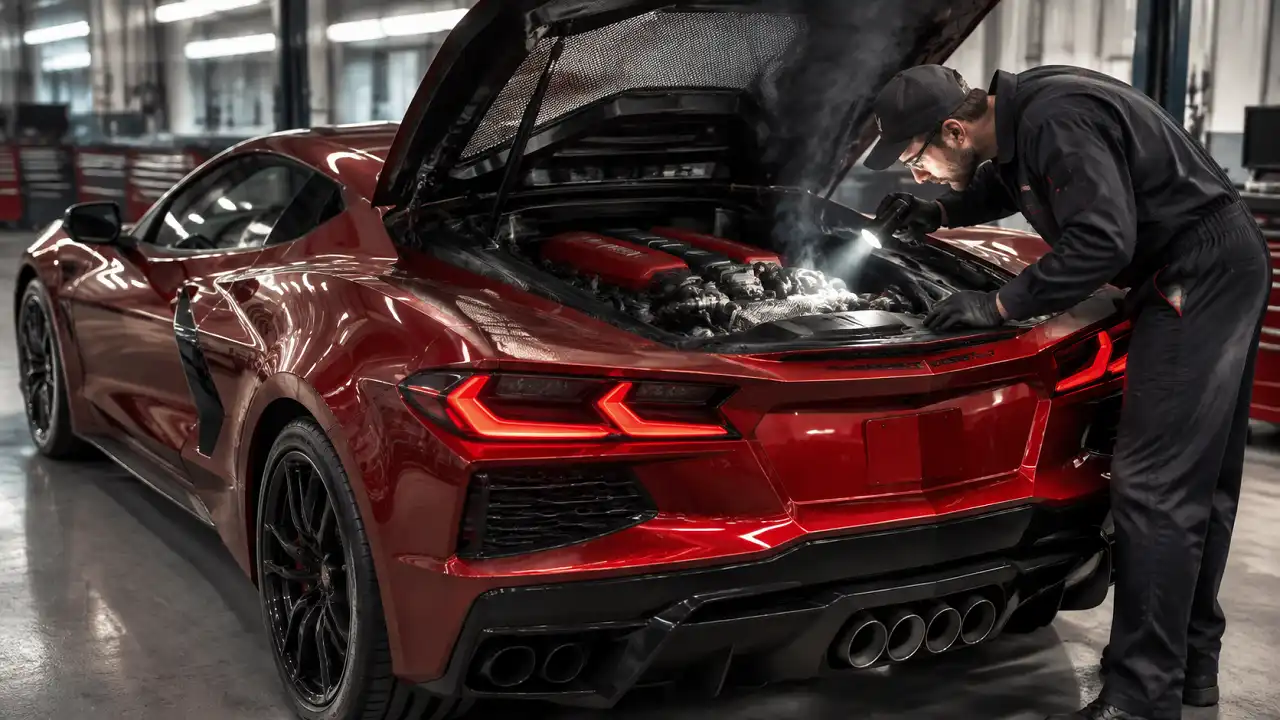
A recall notice with the word “fire” on it is the last thing you want for your Corvette. The Corvette Z06 ZR1 recall fire risk affects owners of Chevrolet’s most powerful cars. Many of them now want to know whether they can still drive and what to do next.
You can handle this calmly and quickly. At Deckers Auto, we help Corvette owners check recall status, inspect for leaks, and understand every step before the car goes back on the road.
Key Takeaways
- Your VIN decides everything. Model badges alone don’t confirm whether your car is included.
- Fluid meeting hot engine or exhaust parts is the core fire hazard.
- Official recall repairs are free at authorized Chevrolet dealers.
- Smoke or a burning smell means stop driving right away.
What Is the Corvette Z06 ZR1 Recall Fire Risk?
The Corvette Z06 ZR1 recall fire risk is about a condition that can let flammable fluid reach hot engine or exhaust components. When oil or fuel touches a surface hotter than its ignition point, it can catch fire inside the engine compartment.
Both cars run extreme engines. The Z06 uses the LT6, a 5.5-liter flat-plane crank V8. A flat-plane crank is a crankshaft design that lets the engine rev above 8,000 rpm. The ZR1 uses the LT7, a twin-turbocharged version rated at 1,064 horsepower.
More power means more heat. Turbochargers and exhaust manifolds run hot enough to ignite leaking oil within seconds.
Your next step is simple: enter your 17-digit VIN on the NHTSA recall lookup.
Which Corvettes Are Affected?
Recall coverage depends on build dates, not just model year. Two Z06s from the same year can have different recall statuses because they came from different production runs or parts batches.
You can find your VIN in three places:
- The driver’s side lower corner of the windshield
- The sticker inside the driver’s door jamb
- Your registration or insurance card
Run the VIN check every few months. Manufacturers can expand recalls after the first notice goes out.
Ineos Grenadier Price: Ultimate Guide to $71K Value for the 2026 model
What Causes Fire Risk in a Mid-Engine Corvette?
Heat plus leaking fluid causes engine fires. The C8 Corvette places its engine directly behind the cabin. That packs heat into a tight space with less airflow than a front-engine car gets.
These are the most common triggers in high-performance engine bays:
- Oil leaks from seals, gaskets, or breather lines dripping onto the exhaust
- Fuel leaks from high-pressure lines, injectors, or fittings
- Oil pushed out under hard driving, such as sustained cornering on a track
- Chafed wiring that wears through insulation and sparks
- Debris like leaves or rodent nests resting on hot parts
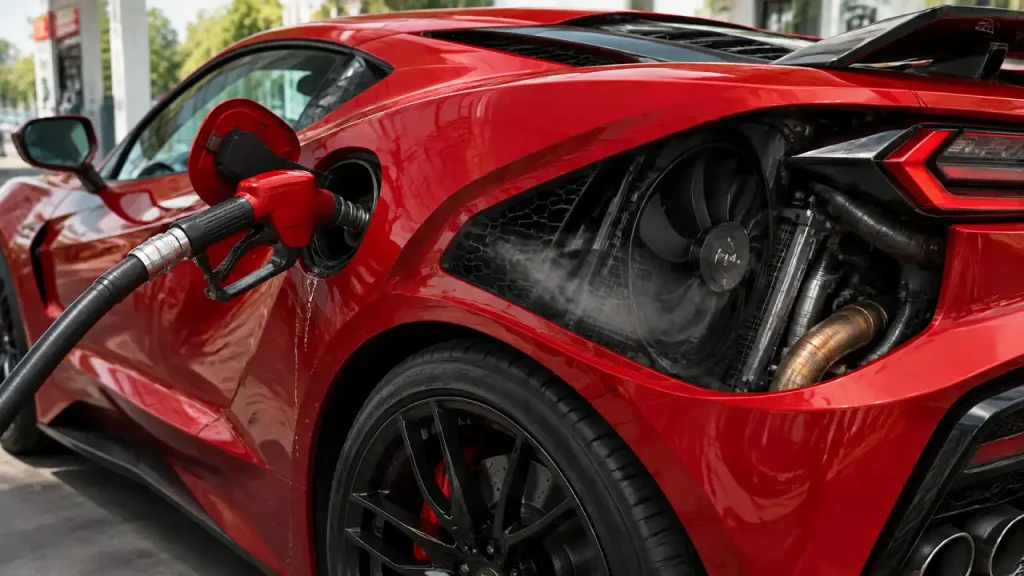
Track use raises the stakes. Long sessions at high rpm push oil systems and seals to their limits. Book an inspection before your next track day.
What Warning Signs Should You Watch For?
Most engine fires give warnings first. A burning oil smell or a small fresh drip under the car is often the earliest clue that fluid is reaching the wrong place.
Use this table to match what you notice with the right response:
| Symptom | Possible Cause | Recommended Action |
|---|---|---|
| Burning oil smell after driving | Oil dripping onto exhaust or turbo | Stop driving and schedule an inspection |
| Smoke from the rear engine area | Active leak touching hot parts | Pull over, shut off the engine, and get out |
| Fresh oil spots under the car | Seal, gasket, or line failure | Book a leak inspection within days |
| Oil level dropping between changes | Internal or external oil loss | Check the level and get it diagnosed |
| Fuel smell around the car | Fuel line or injector leak | Don’t start the car; have it towed |
| Check engine light or DIC warning | Pressure, sensor, or temperature fault | Scan codes before driving further |
The DIC (Driver Information Center) is the display in your gauge cluster that shows oil data and alerts. If a light comes on and you’re not sure what it means, our car dashboard warning lights guide explains the most common ones.
If you see smoke or flames, get out first. Don’t lift the engine cover. Move away from the car and call 911.
Faraday Pouch: Avoid 10 Common Security Mistakes That Expose Your Key Fob
What Should You Do If Your Corvette Is Recalled?
Act within days, not weeks. A small leak can become a steady one after a single hot drive.
Follow these steps in order:
- Check your VIN on the NHTSA recall site or Chevrolet’s owner portal.
- Read the recall notice for any driving or parking limits GM has issued.
- Inspect under the car for fresh oil or fuel spots.
- Call an authorized Chevrolet dealer to schedule the free recall remedy.
- Book a leak inspection if you notice smells, drips, or oil loss before your dealer appointment.
- Save every document from the dealer and the inspection.
Recalls follow a predictable federal process. Our breakdown of the Kia Seltos and Soul recall and NHTSA audit shows how NHTSA tracks whether automakers complete their fixes.
Call your dealer today if your VIN shows an open recall.
What Happens During a Recall Inspection and Repair?
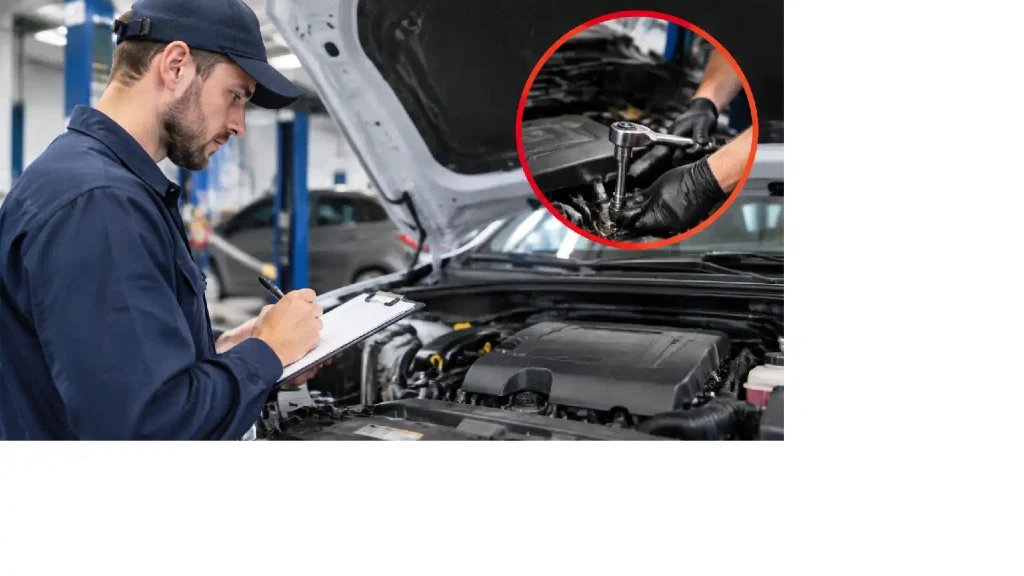
A proper inspection confirms your status, finds active leaks, and makes sure the official fix gets done. Skipping any step leaves a gap where fire risk can hide.
Here’s how a thorough process works:
- Verify the VIN against NHTSA and Chevrolet databases.
- Scan for stored codes in the engine computer.
- Inspect the engine bay for oil, fuel, and coolant leaks near hot parts.
- Check heat shields and wiring for gaps, damage, or chafing.
- Compare fluid levels to spot unexplained loss.
- Complete the official remedy at an authorized Chevrolet dealer.
- Repair non-recall wear items like aging gaskets or damaged lines.
- Road test the car to confirm it runs clean and dry.
Keep your paperwork. Recall records protect your warranty, insurance claims, and resale value. Our Ford truck recall fix guide covers the same record-keeping habits for another major recall.
For model-specific Corvette news and testing, outlets like Car and Driver and MotorTrend track updates closely.
City Car Accident Lawyer – Your Focus is Healing, Ours is Justice
Quick Maintenance Tips
Good habits cut fire risk long after the recall work is done. Each one takes only a few minutes.
- Check your oil level every two weeks and before every track session.
- Look under the car for fresh drips each time you park.
- Notice smells after drives. A burning odor is never normal.
- Keep the engine bay clean so new leaks stand out.
- Clear debris and nests, especially after winter storage.
- Use the oil grade listed in your owner’s manual.
- Schedule a pre-season inspection for seals, lines, and heat shields.
- Turn on NHTSA recall alerts so you never miss a notice.
Why Choose Deckers Auto
Deckers Auto gives Corvette owners straight answers. We tell you what your car needs, what it doesn’t, and where the official recall work belongs.
Here’s what you get:
- Trusted mechanics who know high-performance V8s and mid-engine layouts
- Honest diagnostics with clear explanations and no pressure
- Quality parts that meet or beat factory specs for non-recall repairs
- Reliable service with clear timelines and fair pricing
You’ll always know where your car stands. We inspect, explain, and coordinate next steps with your dealer.
How Used Car Loans Are Making Pre Owned Vehicles More Affordable
Quick Answers to Common Questions
Is the Corvette Z06 ZR1 recall repair free?
Yes. Federal law requires automakers to fix safety recalls at no cost to you. Authorized Chevrolet dealers perform the remedy free, even if you’re not the original owner.
Can I drive my Corvette while it’s under recall?
Follow the instructions in your recall notice first. If GM advises limited driving or outdoor parking, follow it. Smoke or a burning smell means stop driving and arrange a tow.
How do I know if my Corvette is part of the recall?
Enter your 17-digit VIN on NHTSA’s recall lookup or Chevrolet’s owner site. The results show every open recall tied to your exact car.
Can Deckers Auto perform the official recall repair?
Official recall remedies must be done at an authorized Chevrolet dealer so GM covers the cost. We inspect for leaks, diagnose related problems, and repair wear items that add to fire risk.
Does track driving increase the fire risk?
Yes. High rpm, hard cornering, and sustained heat stress oil systems and seals. Get inspected before each track season and check your oil before every session.
Book Your Corvette Inspection Today
The Corvette Z06 ZR1 recall fire risk is serious, but early action keeps it manageable. Check your VIN, watch for warning signs, and never ignore a burning smell or fresh drip. Schedule your inspection with Deckers Auto today for an honest diagnosis and clear next steps.
More Automotive Update Visit Deckers Auto