
Introduction
A supercharger is a forced induction device that pumps extra air into the engine’s combustion chamber. This allows more fuel to be added as well, resulting in increased cylinder pressures and more power output. It provide a cost-effective way to add substantial horsepower, especially to smaller displacement engines like those found in the Mini Cooper.
Note: We think that always try to keep your automotive genuine instead of going with customization, it will maintain your car true value for long time.
While the performance benefits of supercharging a Mini are enticing, it’s important to carefully weigh the pros and cons. Installing a supercharger requires significant engine modifications and expert installation. DeckersAuto shares information about charger systems for Mini cars’ costs, the installation process, benefits, and potential risks to help you make an informed decision.
Recent Released: 2025 Mini Cooper EV Preview – Is It Available In USA?
How To Install a Supercharger on a Mini Cooper

To successfully install a charger on a Mini Cooper, specifically the R53 model, it is essential to follow a structured approach. Below is a revised guide that outlines the necessary steps and considerations for this installation process.
Installation Guide for Supercharger on Mini Cooper R53
Preparation
- Gather Tools and Materials
- Collect all required tools (sockets, wrenches, etc.).
- Ensure you have the supercharger kit, gaskets, and O-rings.
- Safety Precautions
- Disconnect the battery.
- Position the vehicle on a level surface.
Removal of Existing Components
- Remove the Front Bumper
- Detach the splash shield by unscrewing bolts and screws.
- Unscrew the bumper cover from the modular front end.
- Modular Front End
- Disconnect wiring harnesses linked to lights and fans.
- Remove bolts securing the condenser and detach it from the modular front end.
- Engine Components
- Take out the intercooler, air filter housing, throttle body, and bypass air assembly.
- Drain the cooling system and remove the engine accessory drive belt.
Installing
- Fit New Tensioner Assembly
- Install the new tensioner using supplied bolts and torque them as specified.
- Install
- Position the supercharger on the engine and secure it with provided bolts. Ensure all connections are tight without over-torquing.
- Reconnect Engine Components
- Reinstall the alternator, dipstick tube, and any hoses or electrical connections that were removed.
- Fit the drive belt and adjust for proper tension.
- Cooling System
- Refill and bleed the cooling system to eliminate air pockets.
Final Assembly
- Reattach Components
- Reinstall the modular front end, bumper carrier, and bumper cover.
- Reconnect the battery.
Post-Installation
- Check for Leaks
- Start the engine and inspect for any fluid leaks around newly installed components.
- Test Drive
- Conduct a short test drive to ensure proper functionality.
Additional Considerations
- Warranty Implications: Installing may void your Mini’s warranty; consult your dealer if needed.
- Consult Manuals: Refer to specific installation manuals for torque settings and detailed diagrams related to your charger kit.

| Step | Description |
| Preparation | Gather tools, disconnect battery, level vehicle |
| Remove Front Bumper | Detach splash shield and bumper cover |
| Modular Front End | Disconnect wiring harnesses, remove condenser bolts |
| Engine Components | Remove intercooler, air filter housing, drain coolant |
| Fit Tensioner Assembly | Install new tensioner and torque bolts |
| Install | Position supercharger and secure with bolts |
| Reconnect Components | Reinstall alternator, hoses, fit drive belt |
| Cooling System | Refill and bleed cooling system |
| Final Assembly | Reattach front end components |
| Post-Installation | Check for leaks and perform test drive |
This information provides a comprehensive overview of installing a supercharger on a Mini Cooper R53 model while emphasizing safety and functionality throughout each step of the process.
Read: Does Napa Auto Parts Install Batteries? Napa Auto Parts Battery
What tools are essential for installing a Supercharger on a Mini Cooper?

For the successful installation of a supercharger on a Mini Cooper, having the right tools is essential. Below is a detailed list of the necessary tools categorized for convenience.
Essential Tools for Supercharger Installation
| Tool Category | Tools |
| Wrenches and Sockets | – Metric wrench and socket set (10mm, 13mm, 16mm, 18mm) – Deep sockets for specific bolts |
| Screwdrivers | – Flathead and Phillips screwdrivers |
| Pliers | – Standard pliers – Side cutters for hose and clamp handling |
| Torque Wrench | – To ensure bolts are secured to the correct torque specifications |
| Cable Ties | – For organizing wiring and hoses during installation |
| Electrical Tools | – Electrical tape – Solder – Soldering gun for electrical connections |
| Sealants | – Pipe sealer or thread locker to secure fittings |
| Fluids | – Coolant and engine oil for top-ups during installation |
| Specialty Tools | – Tensioner tool for adjusting drive belt tension – Allen key set for specific bolts |
| Miscellaneous Tools | – Universal joint socket adapter for accessing tight spots |
Having these tools readily available will streamline the installation process and minimize potential complications when adding it to your Mini.
Latest Update (January 2025)
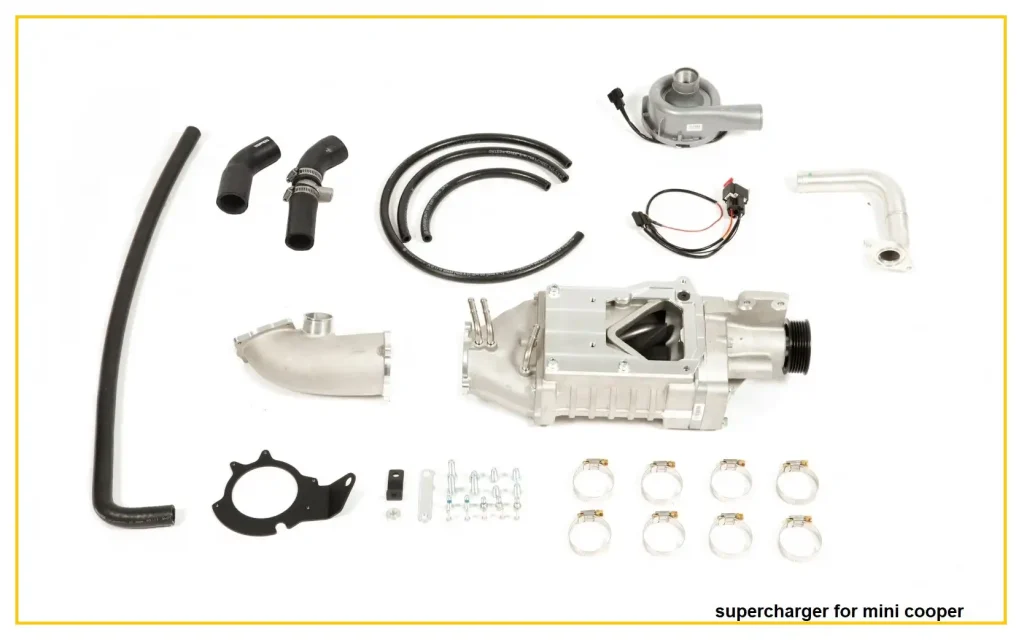
As of January 2025, various supercharger kits are available that include all necessary components and installation tools. These kits are designed to fit specific Mini Cooper models, ensuring compatibility and ease of installation.
For instance, the Harrop TVS900 Supercharger Kit offers a complete solution with essential components such as throttle body adapters and electric water pumps, making it a popular choice among fans.
Read: Find Car Parts and Auto Accessories At Napa Auto Parts Algona ia
Common Mistakes to Avoid When Installing A Supercharger on A Mini Cooper

When installing it on a Mini Cooper, it’s crucial to avoid several common mistakes that can lead to performance issues or installation problems. Below are key pitfalls to steer clear of:
Common Mistakes to Avoid
| Mistake | Description |
| Neglecting Gaskets | Failing to use the proper gaskets can result in leaks. Always ensure gaskets are installed correctly, and consider using high-tack spray for better adhesion. |
| Incorrect Belt Sizing | Using an improperly sized belt for the charger pulley can cause belt slip and performance issues. Verify the correct size for your specific setup. |
| Ignoring Fuel System Upgrades | The stock fuel pump may not provide enough flow for a supercharged engine. Upgrading to a solid-state fuel pump or an appropriate tank is essential to meet increased demands. |
| Improper Torque Settings | Over-tightening or under-tightening bolts can lead to damage or component failure. Always adhere to the manufacturer’s torque specifications during installation. |
| Not Checking for Clearance | Ensure all components have adequate clearance after installation, particularly around the charger and associated piping. Insufficient space can lead to wear over time. |
| Skipping Electrical Checks | Double-check all electrical connections and ensure wiring is secure and insulated properly to prevent shorts or failures. |
| Failing to Bleed the Cooling System | Properly bleed the cooling system post-installation to eliminate air pockets, which can cause overheating issues. |
| Using Old Components | If your Mini Cooper has high mileage, consider replacing old components like the tensioner and spark plugs, as they may struggle with the increased stress from a charger. |
By avoiding these common mistakes, you can ensure a smoother installation process and enhance your Mini Cooper’s performance with a charger.
Latest Updates (January 2025)
As of January 2025, there are no significant updates regarding new common mistakes or changes in recommendations for installing chargers on Mini Coopers from previous sources.
However, it’s always advisable to consult recent forums or professional services for any emerging best practices or technologies in supercharging Mini Coopers.
Read: Is SMYTH Automotive Smyth Auto Parts better than NAPA Auto Parts?
How Long Does It Take to Install a Supercharger on a Mini Cooper
Installing a charger on a Mini Cooper generally requires 6 to 8 hours of labor for someone with moderate mechanical skills. Many fans who opt for a do-it-yourself approach often complete the installation over a weekend, taking their time to ensure precision and accuracy.
For instance, one installer noted that a straightforward charger swap could be accomplished in about 8 hours if done methodically, while more experienced individuals might finish the task in as little as 6 hours.
If you prefer to hire a professional, the labor time can vary significantly, with some shops estimating around 7.5 hours for the installation.
Installation Time Estimates
| Skill Level | DIY Installation Time | Professional Installation Time |
| Moderate Mechanical Skills | 6 to 8 hours | ~7.5 hours |
| Experienced DIY Fans | As little as 6 hours | Varies by shop |
| General Fans | About a weekend | Varies by shop |
This table summarizes the typical timeframes for installing a charger on a Mini Cooper, providing a clear comparison between DIY efforts and professional installations.
Read: What Time Does Napa Auto Parts Close
What are the Benefits of Installing a Charger on a Mini Cooper

Installing a supercharger on a Mini Cooper can significantly enhance its performance, offering a range of benefits that cater to driving fans. Below is a detailed overview of these advantages:
Benefits of Installing a Supercharger on a Mini Cooper

| Benefit | Description |
| Increased Power Output | Supercharging can elevate horsepower by 50-70%, boosting the Mini Cooper’s output from approximately 120 hp to between 180-220 hp, which markedly improves performance. |
| Improved Acceleration | The addition of a charger can reduce 0-60 mph times by over 1.5 seconds, achieving low 6-second ranges. This enhancement facilitates safer merging and overtaking. |
| Enhanced Driving Experience | It provide immediate power delivery without lag, resulting in a more thrilling driving experience, especially noticeable during quick accelerations or traffic navigation. |
| Retained Fuel Efficiency | Despite the power increase, supercharged Mini Coopers can maintain fuel efficiency of over 25 mpg on the highway, allowing drivers to enjoy enhanced performance without significant fuel economy loss. |
| Cost-Effective Performance Upgrade | Installing a charger typically costs between $4,000 to $8,000, making it a more economical option compared to purchasing higher-performance models like the John Cooper Works (JCW). |
| Longevity of Components | When installed correctly by professionals, charger kits can last over 100,000 miles before needing a rebuild, contributing to the overall value of the upgrade. |
Read: How To Find Napa Auto Parts Near Me In the USA and Canada
Adding a charger not only boosts the Mini Cooper’s power and acceleration but also enhances the overall driving experience while preserving reasonable fuel efficiency. This combination makes it an attractive option for car fans aiming to maximize their vehicle’s capabilities.
Benefits of Adding a Supercharger to a Mini Automotive
When properly installed, a charger can provide the following benefits:
- 50-70% power increase: Supercharged Minis can achieve 180-220 hp vs. ~120 hp stock.
- Faster acceleration: 0-60 mph times drop over 1.5 seconds into the low 6-second range. Improves merging and passing.
- Enhanced driving experience: More responsive throttle and power delivery provides an exciting drive.
- Retains good fuel economy: Supercharged Minis can still achieve 25+ mpg highway.
- Cost effective power boost: Supercharging adds substantial power for less than the price jump to a JCW model.
- Long system life: Properly installed supercharger kits can last over 100k miles before rebuild.
For driving fans seeking to extract more excitement from their Mini Cooper without breaking the bank, a charger is a proven way to achieve that goal.
Latest Update: January 2025
As of January 2025, the Mini Cooper S JCW Pack has been launched at the Bharat Mobility Expo. This new model features cosmetic upgrades and a more powerful engine, delivering enhanced performance and an exciting driving experience for fans
Read: Who Owns NAPA Auto Parts and Is It Better than AutoZone for Auto Parts?
Can I Install a Supercharger on a Mini Cooper Without Professional Help?
Installing it on a Mini without professional assistance is feasible, but it poses significant challenges and is generally not advisable for the average DIY enthusiast. Below are the main factors to consider:
Challenges of DIY Installation
Technical Expertise Required:
- The installation of a charger necessitates substantial modifications to the engine, including the removal of stock components, installation of oil feed lines, pulley modifications, and ECU tuning.
- The compact engine bay of Mini Coopers complicates the installation process, often requiring custom fabrication skills.
Risk of Errors:
- Errors during installation can result in severe mechanical problems, such as detonation, premature engine wear, or even complete engine failure.
- Inadequate tuning or improper installation may lead to decreased reliability and performance issues.
Specialized Tools and Equipment:
- Successful installation typically requires specialized tools like torque wrenches, diagnostic equipment for ECU tuning, and sometimes machining tools for engine modifications.
Professional Installation Recommendation
Given the complexity and potential risks associated with the process, professional installation is highly recommended. Experts can ensure proper fitting, optimal tuning, and minimize the risk of engine damage.
Although DIY installation might save on labor costs (ranging from $1,000 to $2,000), it could lead to costly mistakes that surpass these savings in repairs.
Suggest
If you possess advanced mechanical skills, access to appropriate tools, and experience with engine modifications, you might consider attempting this as a DIY project. However, for most individuals, opting for professional installation is the safer and more reliable choice.

| Aspect | DIY Installation | Professional Installation |
| Technical Expertise | High | Moderate to High |
| Risk of Errors | High | Low |
| Tools Required | Specialized tools needed | Standard tools sufficient |
| Cost Efficiency | Potential savings on labor | Higher initial cost but lower risk |
| Overall Recommendation | Not recommended for most | Strongly advised |
This table summarizes the key differences between DIY and professional installations for a charger on a Mini.
Read: Top Automotive Starter Rebuilders Near Me In USA
What is The Supercharger Systems for the Mini Cooper
Several companies offer it kits designed specifically for various Mini Cooper models.

Most are centered around the 1.6L engine found in Mini Coopers from 2002-2006. Popular kits include:
- Harrop HTV1320: Designed for 2002-2006 R53 Minis. Provides a 40-50% power increase.
- Evolve Automotive Stage 1: Offers 45% more power for 2002-2006 R53 Minis. Has integrated air-to-air intercooler.
- Velocity AP: Tuned it pulley system for the R53. Increases boost pressure.
- Mini Maniac Stage 2: Complete charger kit with intercooler for the R53 Mini. Makes around 200 hp.
Many kits include all necessary components like the charger, drive pulleys, oil lines, brackets, and tuning software. Pricing ranges from about $2,500 up to $4,500 depending on the system and components.
Costs of Supercharging a Mini
The total cost of supercharging a Mini will depend on the specific kit, any additional supporting mods, and professional installation charges.
Here are some average cost estimates:
- Supercharger kit: $2,500 – $4,500
- Supporting mods (intercooler, injectors, tune): $500 – $1,500
- Installation (10-20 hours @ $100/hr): $1,000 – $2,000
- Total cost range: $4,000 – $8,000
While not inexpensive, this total cost may be less than the price of trading up to a faster model from Mini. And you get to keep your current Cooper while significantly enhancing performance.
Installation Process and Requirements
Proper installation of it requires extensive mechanical skill and engine modification.
Basic steps include:
- Removing stock intake, exhaust, cooling, and control systems.
- Modifying engine block and cylinder head if required. This may involve machining work.
- Installing oil feed lines, brackets, drive pulleys, and the supercharger unit.
- Reinstalling revised intake, intercooler, exhaust, and tuning systems.
- Custom ECU tuning to optimize performance and reliability.
- Final inspection, dyno testing, and break-in period.
Mini Coopers have very compact engine bays. Thus, physically fitting the charger kit requires some custom fabrication skills. Any oversight in the installation process can lead to severe mechanical issues or even engine damage.
It is highly recommended to have professional shop or mechanic with specific supercharging experience install your Mini Cooper charger.
Read: What Is Mini Cooper supercharger
What is the Potential Risks of Supercharging a Mini
While enticing, forced induction does come with some element of risk, especially if the charger is poorly matched to the engine or installation is sub-par.
Potential risks include:
- Premature wear or damage: Too much boost can overload stock engine components leading to early failure.
- Detonation/knock: Bad tuning can cause damaging engine knocking from premature ignition.
- Reduced reliability: Supercharged engines tend to require more frequent maintenance.
- Voided warranty: Most Mini factory warranties are void once engine is modified.
- Resale impact: Heavily modded cars can negatively impact resale value.
Proper supporting modifications, conservative boost levels, high-quality components, and professional installation help minimize these risks. Work with a reputable supercharging specialist shop on your Mini Cooper.
Read: Is AutoZone better than NAPA for auto parts? A Comprehensive Comparison
Basic Takeaways
Here are some Basic summary points on supercharging your Mini Cooper:
- Multiple charger kits are available specifically for Mini Coopers, providing 50-70% power gains.
- Complete costs typically range from $4,000-$8,000, including supporting mods and installation.
- Proper installation requires substantial mechanical expertise and engine modification.
- Benefits include dramatically increased power, acceleration, and an improved driving experience.
- Potential risks like premature engine wear are minimized through smart boost levels and high-quality components.
- Work with an experienced professional Mini supercharging shop for installation.
While not inexpensive or risk-free, a properly installed it can profoundly transform your Mini Cooper into an exciting rocketship while retaining good fuel efficiency. Use the guidance in this article to decide if supercharging your Mini is the right choice.
As Per DeckersAuto
Installing charger on a Mini Cooper allows driving fans to extract substantially more power and performance from these fun cars. However, it also requires carefully weighing the costs involved, installation complexity, potential benefits gained, and inherent risks. Use this guide’s insights to determine if a supercharged Mini Cooper aligns with your automotive goals and budget.

With proper supporting modifications and professional installation, a charger can provide huge performance gains and enhance your Mini’s driving experience for years.
More Automotive Update Visit Deckers Auto